Air Conditioner Buying Guide
Air conditioners can be essential in peak summer periods, making your home or office a cool sanctuary against the sweltering heat. This air conditioner buyers guide should give you the facts you need to choose the right unit for you.
1. How much power do you need?
When buying air conditioners, your first consideration is likely to be how powerful the device needs to be to adequately cool your home. Air conditioner capacity is rated by BTU (British Thermal Unit) and power output in kilowatts. Buying the right size unit is very important as air conditioners that are too big will use more energy, while under-sized ones will not cool the room sufficiently. As a rough guide, 80 watts of power per square metre should be enough for bedrooms, while living rooms may require around 125 watts per square metre. So for a living room measuring 30 square metres, a unit of approximately 3.75kW will be needed. The Good Guys air conditioner experts can help you work out what you need in store.
2. Types of Air Conditioners
Split System
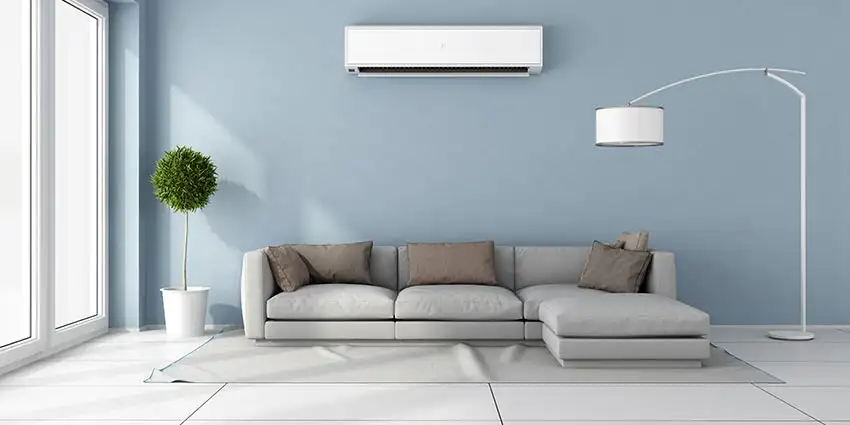
These air conditioners are made up of two parts, with one attached to the internal wall, while the other sits on the outside to exhaust heat out. These are low cost to install and with separate units for each room they provide flexibility. What size split system do I need? That depends on whether it’s for a bedroom or lounge room, and how big the room is you’re trying to cool. Use the information above to calculate how many watts you need your split system to be to cool the room effectively. Not sure where to position a split system? The internal part of the split system should be positioned away from any heat-generating appliances such as ovens, up on the wall so cool air is distributed around the room, never above electrical fittings for safety reasons, and somewhere that suits the style of the room. Position the external part in the shade (if possible), away from dust and falling tree leaves, and in a spot that won’t be too noisy for you or the neighbours.
SHOP SPLIT SYSTEM
Reverse Cycle Split System (Heating & Cooling)
A reverse cycle split system can be used as an air conditioner in summer and a heater in winter for year-round home comfort. When it comes to thinking about a reverse cycle split system vs ducted heating, putting in a reverse system that cools and heats is easier and cheaper than getting a ducted heating system, as a ducted system has to be tailored to suit your unique home and ducts need to be installed in your floors, walls or ceilings.
SHOP REVERSE CYCLE SPLIT SYSTEM
Inverter System
Air conditioners with inverters are able to vary the temperature of the air they produce, rather than stopping and starting. They are often quieter, cheaper to run and achieve the desired room temperature more quickly – although they are more expensive.
Multi System
Multi-split air conditioners connect multiple indoor units to a single outdoor condenser. They require less ductwork, but a single control station operates the whole system, meaning individual room temperatures are not possible.
Window Wall
This type of air conditioner can be installed into an external hole in the wall or onto a window sill. Some models can heat and cool, so you only need one appliance to keep you cool in summer and warm in winter.
SHOP WINDOW WALL
Portable Air Conditioner
This type of air conditioning is a great solution for those needing a quick fix - just plug it in to the power socket and it’s ready for use. The reverse cycle model can heat and cool, so you only need one appliance to create the perfect in-door climate all year round.
SHOP PORTABLE AIR CONDITIONER
3. What sort of extra features do you need?
Air conditioners with more features tend to be more expensive, but here is a list of common extras that are available:
Remote control - allowing you to control the temperarure from afar
Timer - the air conditioner will turn itself off at the desired time to help you save on energy bills
Dehumidifier - lower the level of humidity in the air for a more comfortable home
Reverse cycle - this type of air conditioning can heat and cool to give you year round home comfort
Slide-out chasis - allows for easier installation
Mosquito traps - keep you protected from mosquito bites
Air filter - removes odours, smoke and germs
4. Energy Efficiency
Air conditioners are rated on their energy efficiency using a ten-star scale, with more stars meaning the unit is better for the environment. For units with cooling and heating functions, separate ratings are given for each. Inverter air conditioners are more energy efficient due to their ability to regulate temperature without starting or stopping. To find out more about how you can cool your home in the most energy efficient way and save on bills, read the Quick Tips for Choosing an Energy Efficient Air Conditioner.
SHOP PORTABLE AIR CONDITIONER
5. Choose a professional installer
Installing an air conditioner is very technical and involves many processes. In Australia, you will need to hire a licensed professional to install and service your new air conditioning system , and they can help you work out where to position your air conditioner. These air conditioner installation experts have had relevant training and are licensed to handle refrigerants. Air conditioner installers must have one of two licenses issued by the Australian Refrigeration Council – either a Full Refrigeration and Air conditioning (RAC) License or a restricted ‘splits’ license. Air conditioners often include manufacturer’s warranties, so to ensure you’re covered under the warranty if something goes wrong, professional installation is a mandatory. Need to get your new air conditioner installed fast? Let the Concierge Home Installation team at The Good Guys arrange for a lincesed and insured professional to do your air conditioner installation for you. No stress, no mess and all work is guaranteed.


Comments (0)